This text is an excerpt from the book “Coplero que canta y toca” (A biography of Alberto Arvelo Torrealba) written by his daughter, Mariela Arvelo. She offers a firsthand account of the genesis of what later became the Quinteto Contrapunto.
Speaking of music, our house in Rome witnessed the beginnings of the Quinteto Contrapunto, or rather, the seed of the quintet, because at first there were only two members of the famous group: Rafael “Fucho” Suárez and Domingo Mendoza.
The first of them, Rafael Suárez, was a composition student at the Santa Cecilia Conservatory in Rome, and had managed to create unique musical arrangements for some popular Venezuelan corridos that my father had rescued from oblivion. Rafael later met with Domingo Mendoza, a former member of the University Choir of Caracas. Very soon the two musicians united their talents, entered into fruitful harmony, conceived a new project, and ideas began to flow. Then Rafael Suárez set about writing his arrangements for two voices. It wasn’t long before the duo began to perform Venezuelan folk music in a novel and unique way.
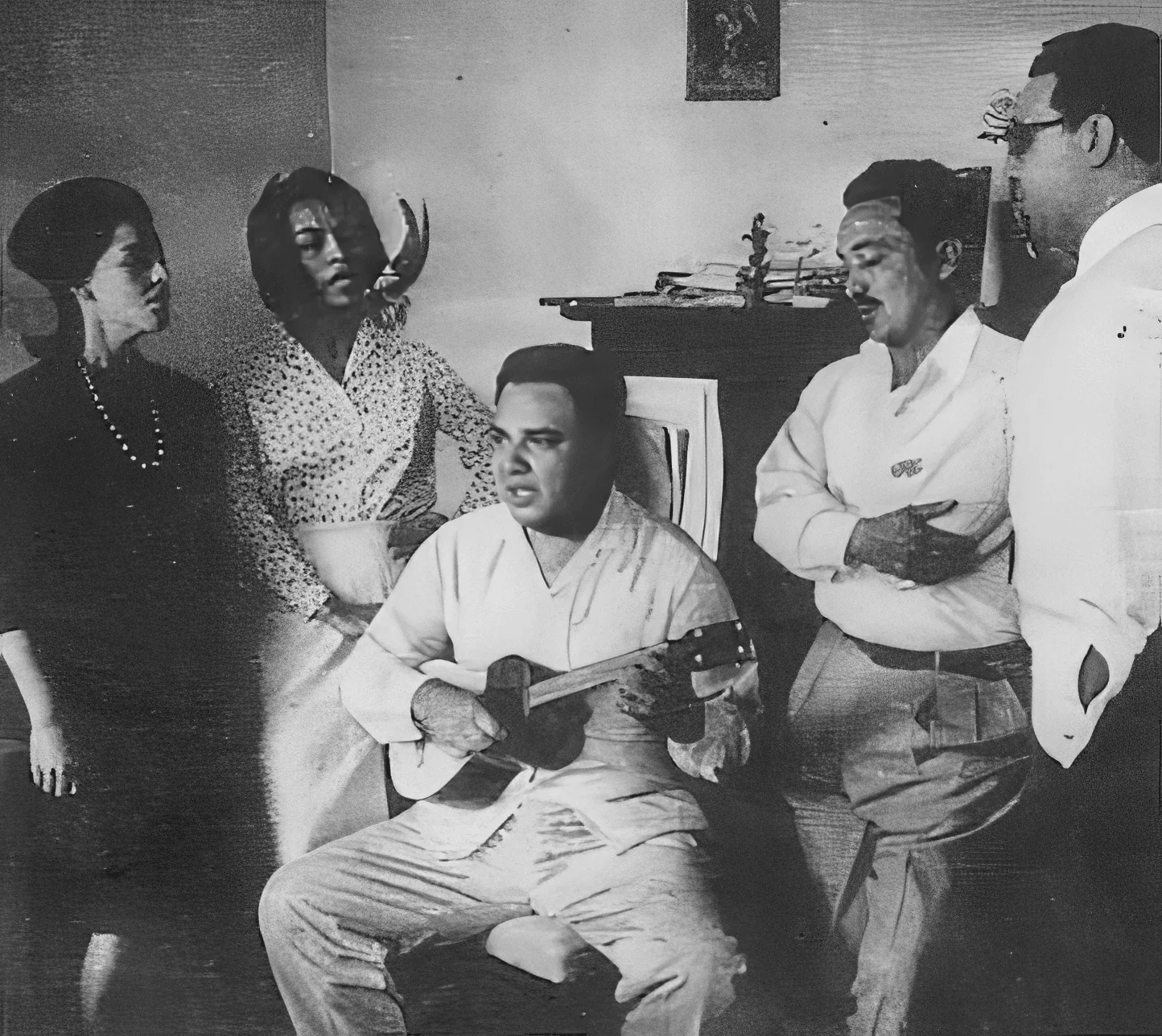
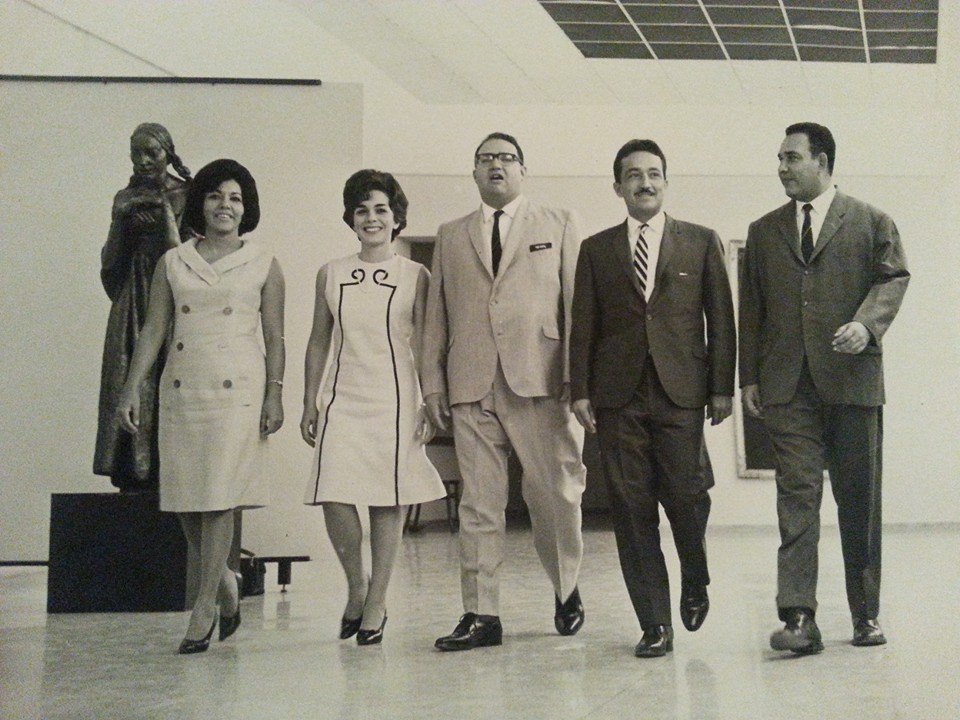
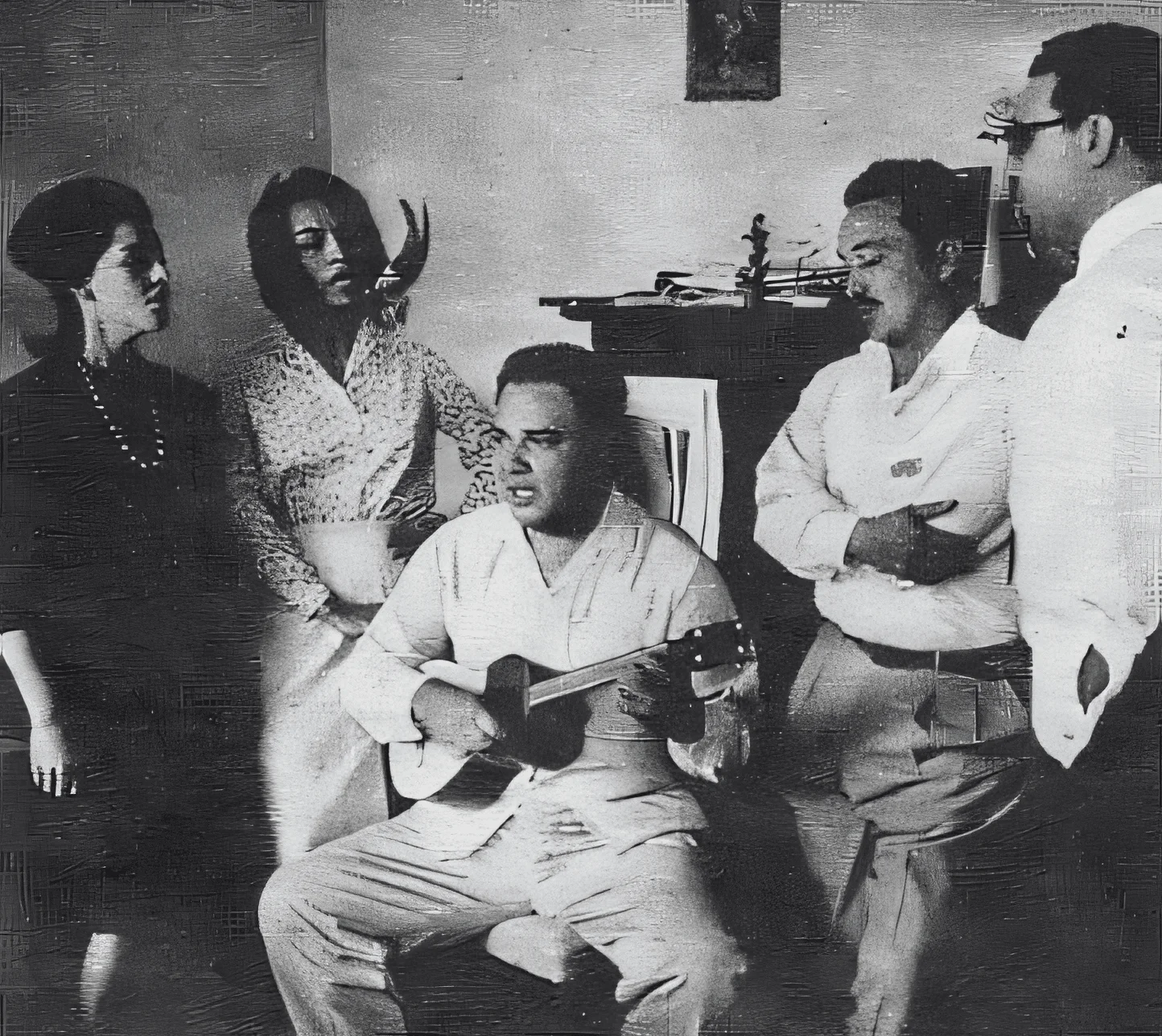
Years later, in the early 60s, baritone Rafael Suárez (in his role as director, arranger, and Venezuelan cuatro player), and bass Domingo Mendoza, would meet to play and sing at our house in Caracas. To the initial duo were added the voices of mezzo-sopranos Aída Navarro and Morella Muñoz and tenor Jesús Sevillano. The Quinteto Contrapunto had been formed! Very soon came the release of their first album, which achieved tremendous success.
The very name of the group, “Contrapunto”, was suggested by my father, whom the musicians considered their godfather. Sometimes, as a gesture of affection toward the family, they would rehearse at the Quinta Mariela and offer dad a seat of honor. He would make comments that the singers took into account, and would jubilantly applaud the fantastic performances.
Among the musical pieces of the Quinteto Contrapunto was “La Puerca”, a fun, very old popular joropo that my father had taught them. At family parties, he enjoyed the humorous piece, and would gracefully sing the “old woman’s” solo, adapting his voice to the very trembling voice of the character:
“Muchacha, espantá esa puerca, porque me quiere quitar la vía. Escúchala como hace, escúchale el ronquío, ¡Jo Jo Jo Jo!”
…When the song ended, everyone would burst out laughing.
Among the other songs my father taught Contrapunto were “Cándida María” and the “Corrido de los Pájaros”. We will talk about this last composition in another chapter.
Arvelo, Mariela - “Coplero que canta y toca” pp 344-345.