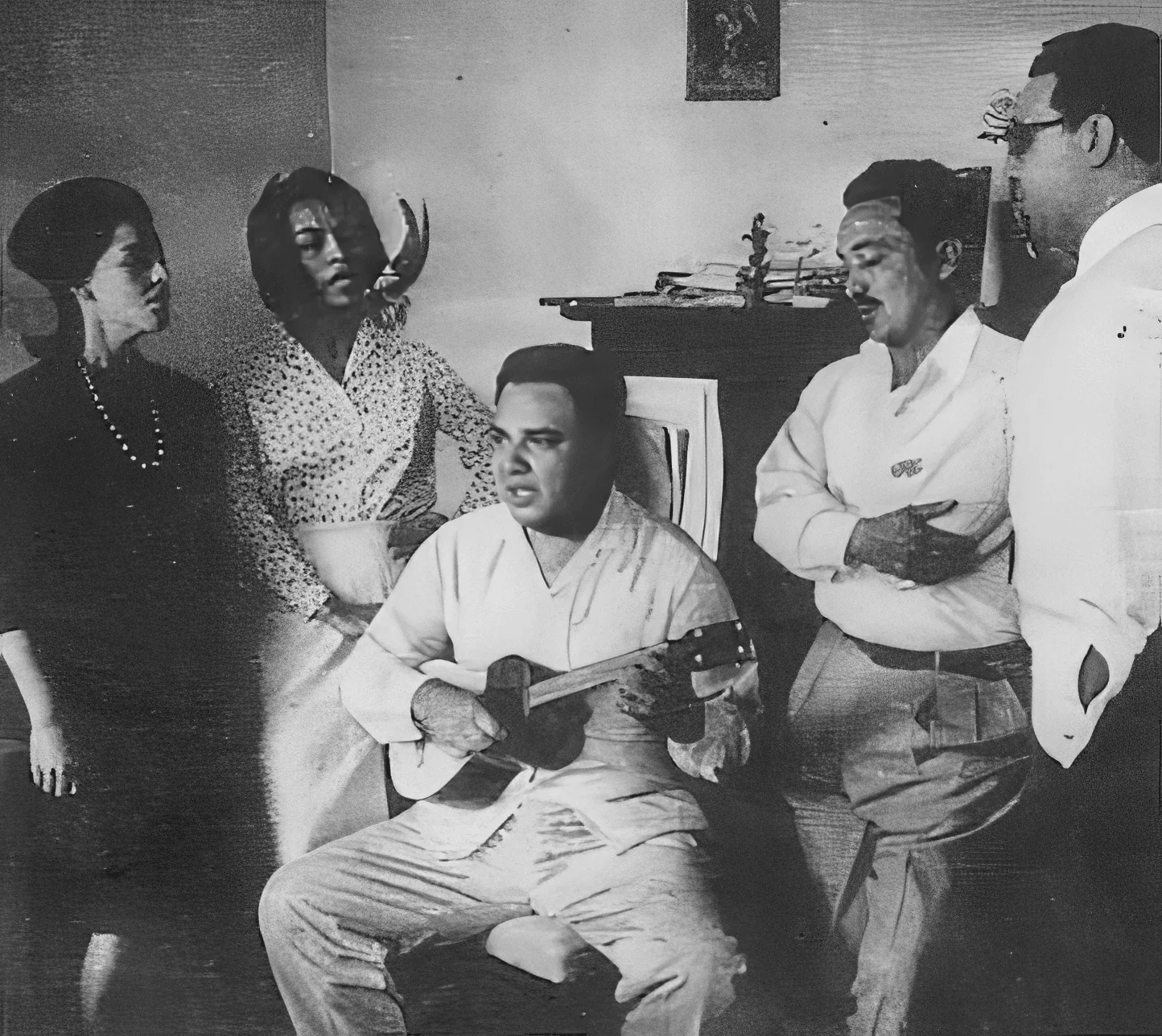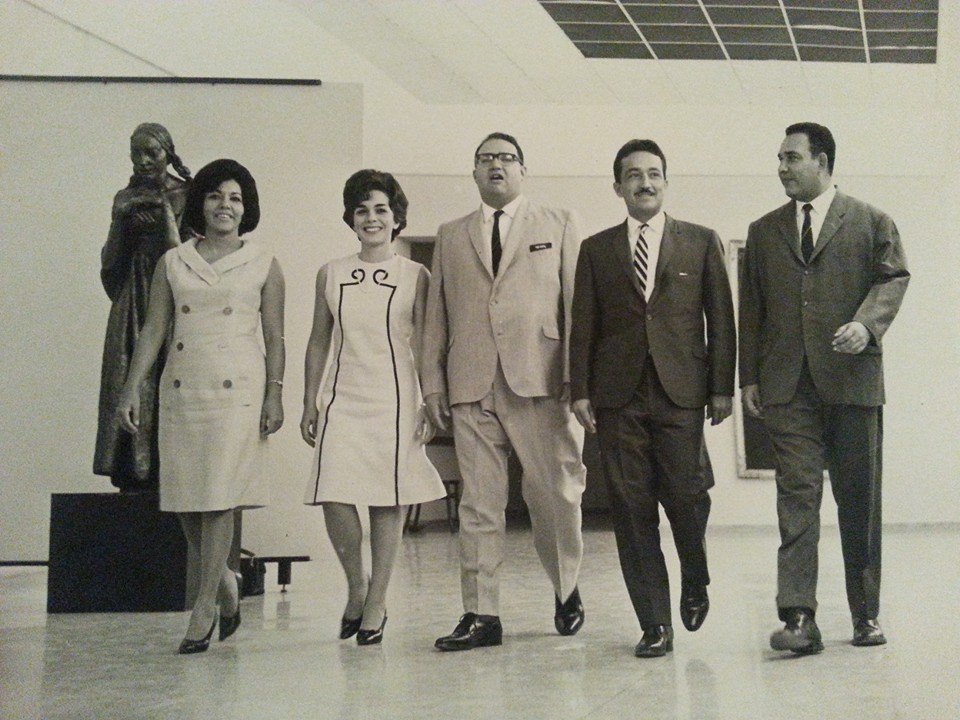
This text is an excerpt from the book “Coplero que canta y toca” (A biography of Alberto Arvelo Torrealba) written by his daughter, Mariela Arvelo. She tells us firsthand how the lyrics to this old popular melody came about.
PINTURITAS DEL PAISAJE (Lyrics of an old joropo from Barinas)
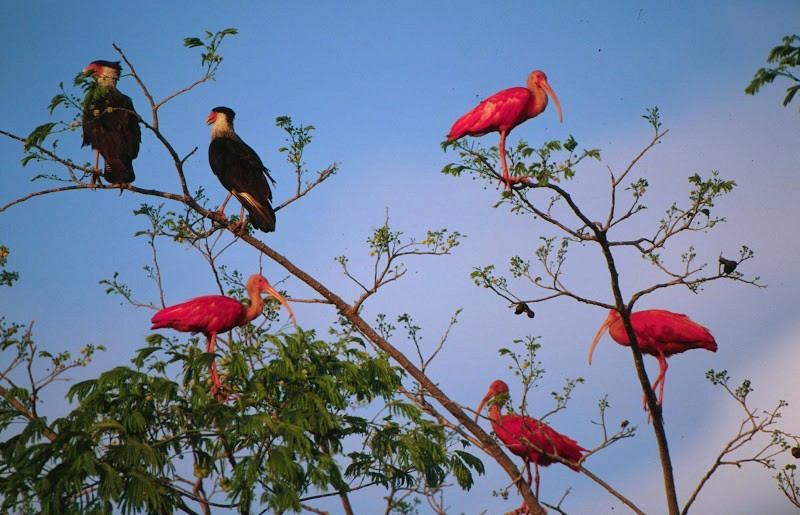
I wish to make special mention of this composition, whose music is incredibly ancient, and whose lyrics are by my father. This joropo has been performed by different musical groups—among them the Quinteto Contrapunto—under the title “Corrío de los Pájaros” (Corrido de los pájaros.)
“Pinturitas del paisaje” is a very dear poem, as I was present, very close to my father, when he wrote the verses. But I correct myself: he didn’t write the verses; he only dictated them, while singing and driving the car, on one of the many trips we made from Caracas to Acarigua, between August and December 1956, after my return from Italy.
That time, mom and dad were in the front seat, and in the back was I, next to my cousins Rosita and Ninina, our two guests for the weekend outing. The three of us young women liked to sing, and dad would ask us for songs he wanted to hear on the journey: corridos llaneros, Los Panchos boleros, and Gardel tangos… My mother, who had a beautiful voice, would also join the group, and sometimes dad would get excited to sing with us one of his favorite ballads. The car seemed like a walking gramophone!
Suddenly, when we were passing through Turmero, dad asked us:
– Girls, do you want to learn the “Corrido de los pájaros”? – Yes!!! - we answered – Then write it down!, because right now I’m going to make it up… Here comes the first stanza, sung to the music of an old joropo!
Mom handed me a pencil and a notepad, and I began to copy hurriedly, while he sang and dictated at the same time:
“La paloma, pobrecita, la mató el gavilán cuando estaba en los copitos del caujaro: yo lo vi cuando pasó para el entierro con su luto y su querella el taro-taro”.
He repeated it a couple of times to give me time to copy… And then he ordered:
– Now you sing it!
We sang again and again, until dad said, satisfied:
- Very good! You already know the first one. Now I must think about the second stanza…
Mom and we remained silent, so he could concentrate… Not even half an hour had passed when he spoke to us, very enthusiastically:
- Ready young ladies! Write down the second one!…
He began to sing, and my cousins and I began to write:
“Las chenchenas del Masparro tienen un parrandón que se escucha llano arriba y llano abajo: yo lo vi cuando pasó para la fiesta de amarillo y paltó negro el arrendajo”.
We continued our happy and musical journey to Acarigua: Every few kilometers a new stanza for the old joropo from Barinas.
We had already noted down and learned five stanzas when we stopped at a small roadside restaurant for lunch. It was very hot when we resumed our course to Acarigua and for a while my cousins and I remained silent, wanting to sleep and with little desire to continue singing…
The afternoon was cooling down when dad called our attention:
- It’s time to wake up, ladies! We’re about to arrive in Acarigua and we still need the last stanza. Write quickly, before the idea slips away!
And we fully completed the final part of the task: We were stopping in front of the grandparents’ house when we copied and sang the last stanza of the song:
“Allá vienen la camata, el tucán y el paují apostando a quien más grita y quien más vuela: Yo los vide, pinturitas del paisaje sobre el verde corazón de Venezuela”
(1) Arvelo Torrealba, Alberto - “Obra poética” pp.236-237
Arvelo, Mariela - “Coplero que canta y toca” pp. 486-488